Early signs of hip dysplasia in dogs — and what gait can reveal first

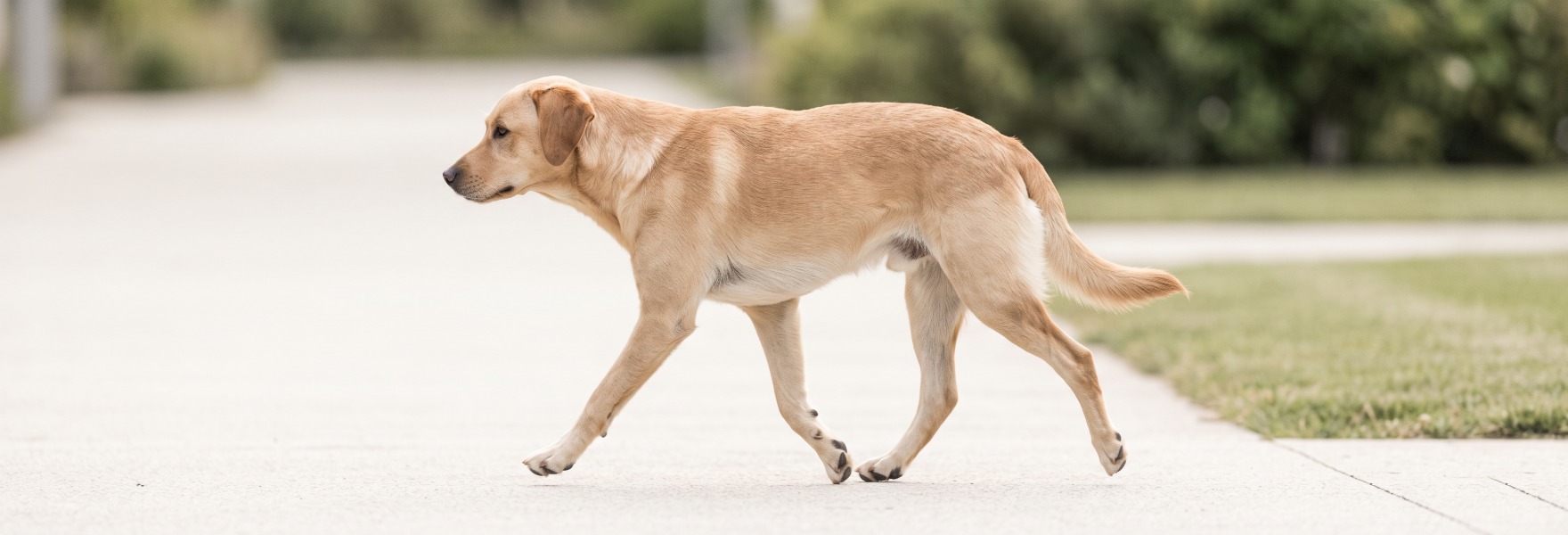
Hip dysplasia usually alters how a dog moves — shorter strides, a subtle hip sway, reluctance on stairs — months before an obvious limp appears. Tracking gait over time helps you notice these changes early and bring objective information to your vet. caniscan is a screening tool, not a diagnosis.
Dogs are remarkably good at hiding discomfort. It's instinct — a dog that looks weak is vulnerable — so by the time most owners notice a clear limp, the underlying joint change has often been developing for months. That gap is exactly where early screening earns its keep.
What hip dysplasia actually is
Hip dysplasia is a malformation of the hip joint where the ball and socket don't fit together smoothly. Over time the resulting laxity and wear lead to discomfort, reduced range of motion, and compensatory changes in how a dog distributes its weight.
It's most common in larger breeds, but it isn't exclusive to them — and severity varies widely, which is part of why early, repeatable observation is so valuable.
The early gait changes to watch for
Before an obvious limp, the signals are usually subtle: a shorter stride on the hind legs, a slight side-to-side sway through the hips, a 'bunny-hop' when running, or a new reluctance on stairs and jumps. Individually, any one can be nothing. Together, and trending in one direction, they're worth attention.
Why a single moment can mislead
A dog can look perfectly fine on a good day and stiff on a cold morning. That's why caniscan emphasizes trends over snapshots — a mobility score that drifts downward across several scans tells you far more than one clip ever could.
“Any movement change worth noticing is worth a conversation with your vet. caniscan screens and surfaces — it does not diagnose.”
How to track it at home
A short monthly video of your dog walking, taken the same way each time, gives you a consistent baseline. Compare stride length and symmetry across scans rather than judging a single clip in isolation — trends are far more informative than snapshots.
Get a baseline this week
Run a free scan and see your dog's mobility metrics today — then watch the trend over time.
This article is general educational information and a screening-oriented guide — not veterinary advice, diagnosis, or treatment. Always consult a licensed veterinarian about your dog's health.