What happens between your video and your dog's report
Six steps, a few minutes, no special hardware. Here's exactly how a clip of your dog walking becomes structured, vet-ready gait data.
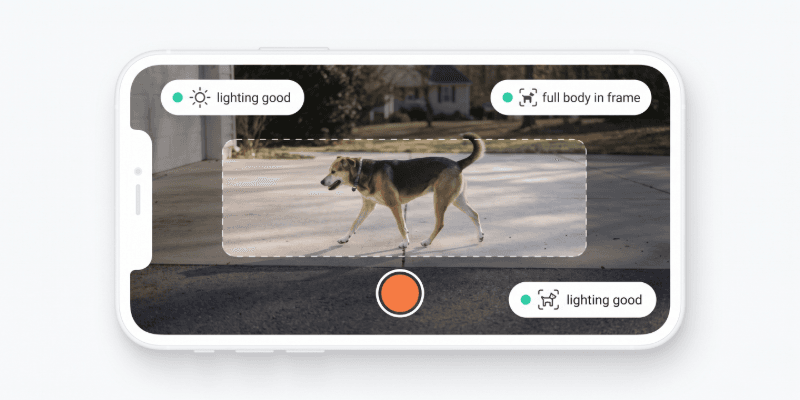
Record an 8–15 second walking clip
Film your dog walking across the frame in landscape. An on-screen overlay shows the ideal distance and angle, and a capture checklist confirms lighting and full-body framing before you stop.
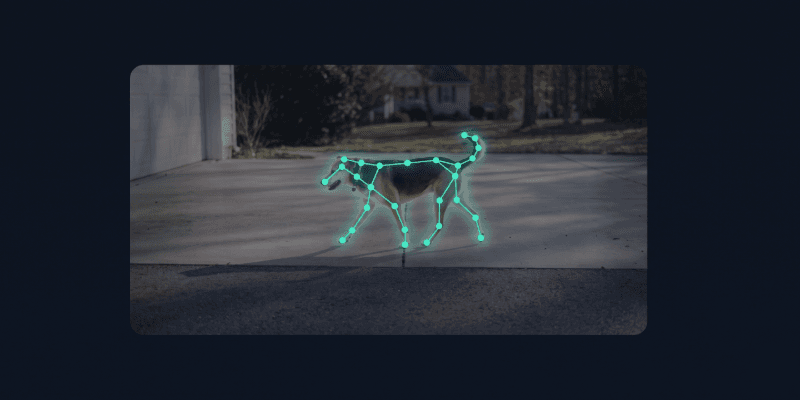
AI maps 25 anatomical keypoints
A canine-specific pose-estimation model (YOLOv8-Pose) locates 25 anatomical points — shoulders, hips, hocks, paws, spine — frame by frame, building a motion track of how your dog actually moves.
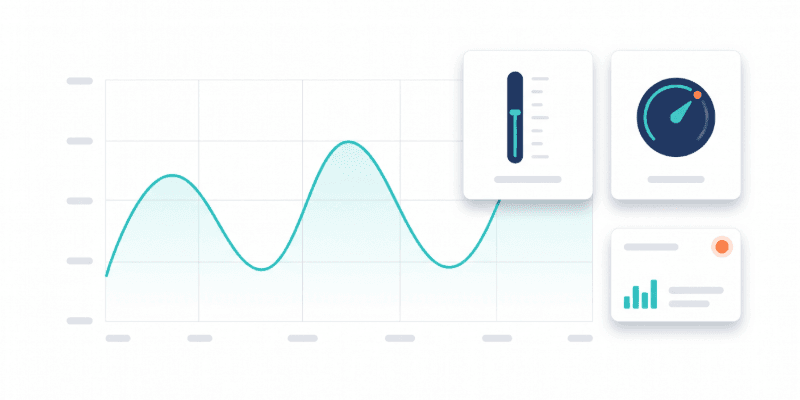
Keypoints become gait metrics
From that motion track caniscan computes a symmetry index, range of motion, and stride, cadence and velocity — the same families of measurement a gait lab looks at, derived from your phone.
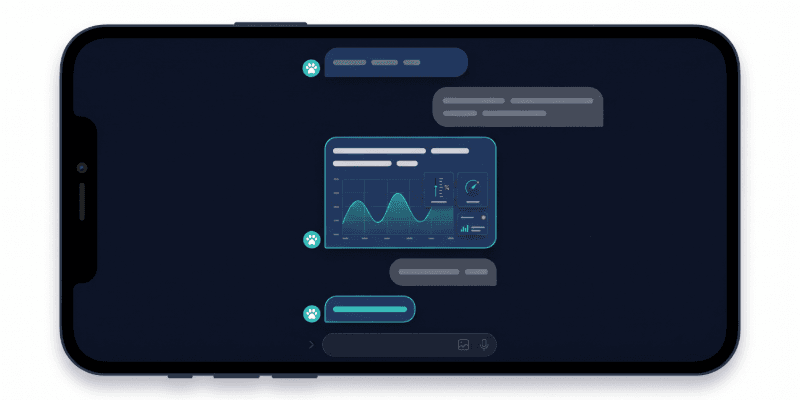
Ask questions in plain language
A history-aware AI assistant answers questions about the scan using your dog's own data. It is explicitly screened against making diagnostic statements — it explains and contextualizes, it does not diagnose.
Everything compiles into one report
Mobility score, metric breakdown, trend context and the AI summary are assembled into a single clean report — readable at a glance and detailed enough to act on.
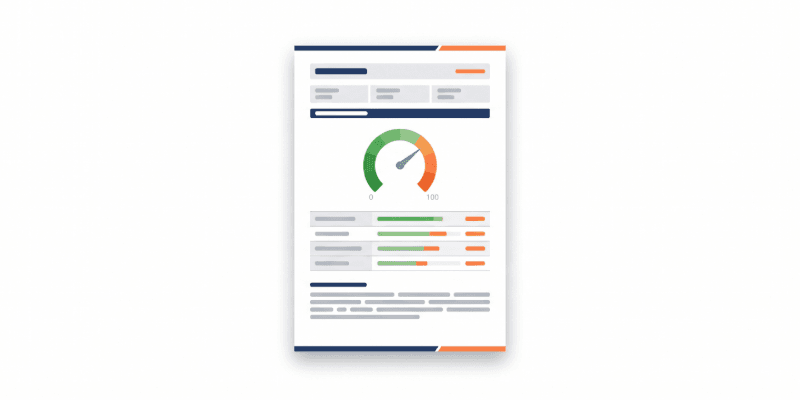
Send it to your vet before the visit
Export a PDF or share a secure link so your veterinarian receives structured, quantitative information ahead of time — not just a verbal description of what you noticed.

What you get back
Every scan produces the same structured report — readable for you, quantitative for your vet.
Gait is broadly symmetric with a mild reduction in left-hind range of motion. No abrupt irregularities detected. Consider a follow-up scan to confirm the trend before discussing with your vet.
A single mobility score
One 0–100 number that rolls up the underlying metrics into something you can track at a glance.
Metric breakdown
The individual measurements — symmetry, ROM, cadence, stride, velocity — with plain-language context.
Trend over time
Re-scan and watch the score and metrics move, so a slow decline shows up before it becomes a limp.
Plain-language AI summary
A short written interpretation you can read yourself or hand to your vet — framed as screening, not diagnosis.